 RU
RU
Report on commissioning of concert equipment: what should be included
What is included in the concert equipment commissioning program report: acts, measurement protocols, and a list of comments.
What is included in the concert equipment commissioning program report: acts, measurement protocols, and a list of comments.

A concert equipment commissioning program report is the final technical document that confirms that the installed system—whether a sound reinforcement system, concert lighting, or LED screens—has been tested, calibrated, and operates according to specifications, not simply turned on and "apparently working." For the client, this isn't a formality for the archives, but the only way to ensure that the money spent on equipping the hall resulted in a functioning, measured, and configured system, not a set of expensive equipment with randomly selected settings.
Concert equipment isn't just one system, but usually three: sound reinforcement, lighting, and LED screens, each with its own inspection protocol. Whether you're preparing tender documents and outlining contractor reporting requirements, or have already accepted the work and are checking to make sure you haven't forgotten to include anything in the acceptance report, this article will analyze the document's full composition across all three areas: what it records, the program and methodology for commissioning tests, and the meaning of the parties' signatures in the final report.
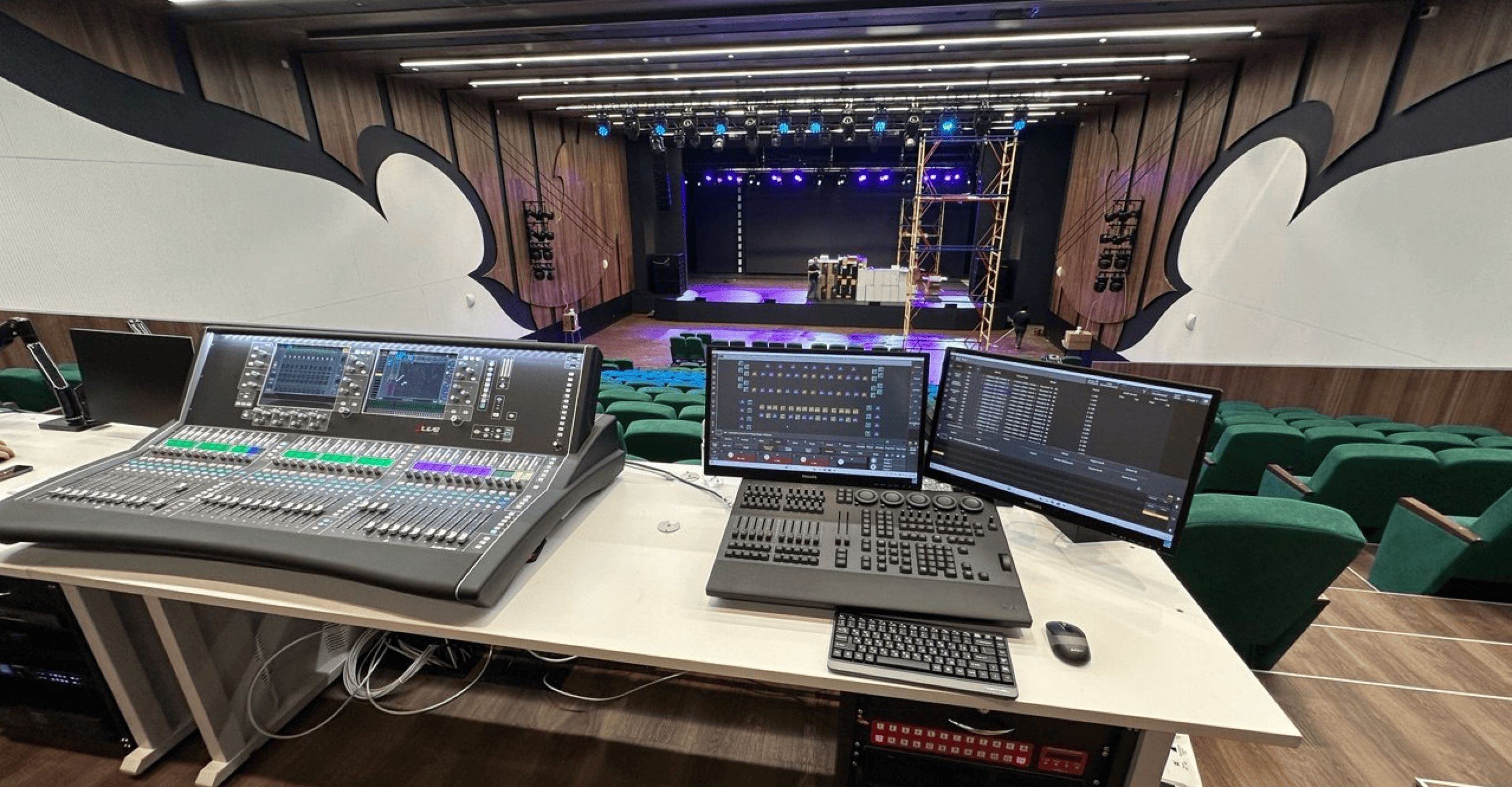
A comprehensive report isn't a single sheet of paper with a signature, but a complete package of documents. Some of these documents are general for any system, while others are specific to sound, lighting, or screens.
For the client accepting the work, these lists serve as a practical acceptance checklist. If the submitted documents do not contain measurements or calibrations for their own system, but only general documents, the contractor has issued a truncated version of the report, not a proper one, and it's too early to sign the acceptance certificate.
The report doesn't appear spontaneously; it's compiled as part of the commissioning testing program and methodology. The general logic is the same for all three systems; the specific measurements during the testing phase vary:
First, a visual audit and a cold start: the engineer checks the actual switching and installation against the design documentation, without yet sending an operating signal to the equipment.
Next comes setting up the network part: for sound, this includes updating the firmware of the DSP processors and addressing in digital networks (Dante and similar); for lighting, this includes addressing the devices in the DMX network; for screens, this includes configuring the video processor and network connection of the modules.
Then comes the actual measurements and calibration: for sound, the frequency response is measured and time delays are reduced; for light, the instruments are focused according to the setup plan; for screens, the brightness and color rendition between modules is calibrated.
After setup, the system is put through a stress test: for sound and light, this is a test of stability under peak loads and temperature conditions; for screens, this is a test for artifacts during long-term operation.
The program concludes with acceptance: backup copies of the final settings and presets for each system are made, and the technical staff of the hall undergoes training—without this, even a perfectly tuned system will quickly become out of tune in the wrong hands.
For more information on how we structure this process, please visit the service page. «Commissioning and equipment setup».
Most contractors, including our company, use two terms for this document, each describing different parts of the same process. The "Commissioning Report" is the entire technical package: measurement protocols, statements, and recorded configuration parameters. The "Commissioning Certificate" is the final legal document within this package: it is signed by the responsible representative of the client (the facility's technical director or authorized person) and the contractor's representative, usually the project's lead engineer.
The date of signing the acceptance certificate is not a formality, but the starting point of the warranty period for the work performed. Until the acceptance certificate is signed, the work is not formally considered accepted, and it is too early to file any complaints about the quality of the setup—the system is still undergoing testing.
There is no strict industry standard that regulates the format of a commissioning report for concert equipment. The composition and format of the document in such cases are determined by the agreement between the client and the contractor. Unless otherwise expressly specified in the contract, the report may be drafted in any format, following the general principles of as-built documentation accepted in the engineering systems industry.
Is a commissioning report required by law? There's no direct law requiring the preparation of a "concert equipment commissioning report." However, if the design, installation, and setup are performed by different organizations, a commissioning report is required as part of the as-built documentation for the facility—without it, it's difficult to confirm that the system has been accepted and put into operation.
What to do if the contractor did not provide a report? Do not sign the acceptance report until you receive the complete package of documents. The report provides proof that the equipment has been tested and not simply turned on; without it, the customer has no grounds for a claim if the system fails during the first month of operation.
How long should a document be kept? At a minimum, the entire warranty period for the equipment and work performed—usually 1–3 years, depending on the contract terms. In practice, it's worth keeping the document longer: it will be useful during maintenance, system upgrades, or disputes with the contractor.
If you need to choose a contractor for commissioning not just by ear, but with a full program - with measurements, protocols and a clear report at the end - see how we organize commissioning and equipment setup. We'll explain what will be included in your property's report even at the proposal stage.
Author of the article: Andrey Shmakov