RU
RU
Background voiceover
We create a comfortable environment for business. We design, supply, and install public address systems of any complexity.
We create a comfortable environment for business. We design, supply, and install public address systems of any complexity.

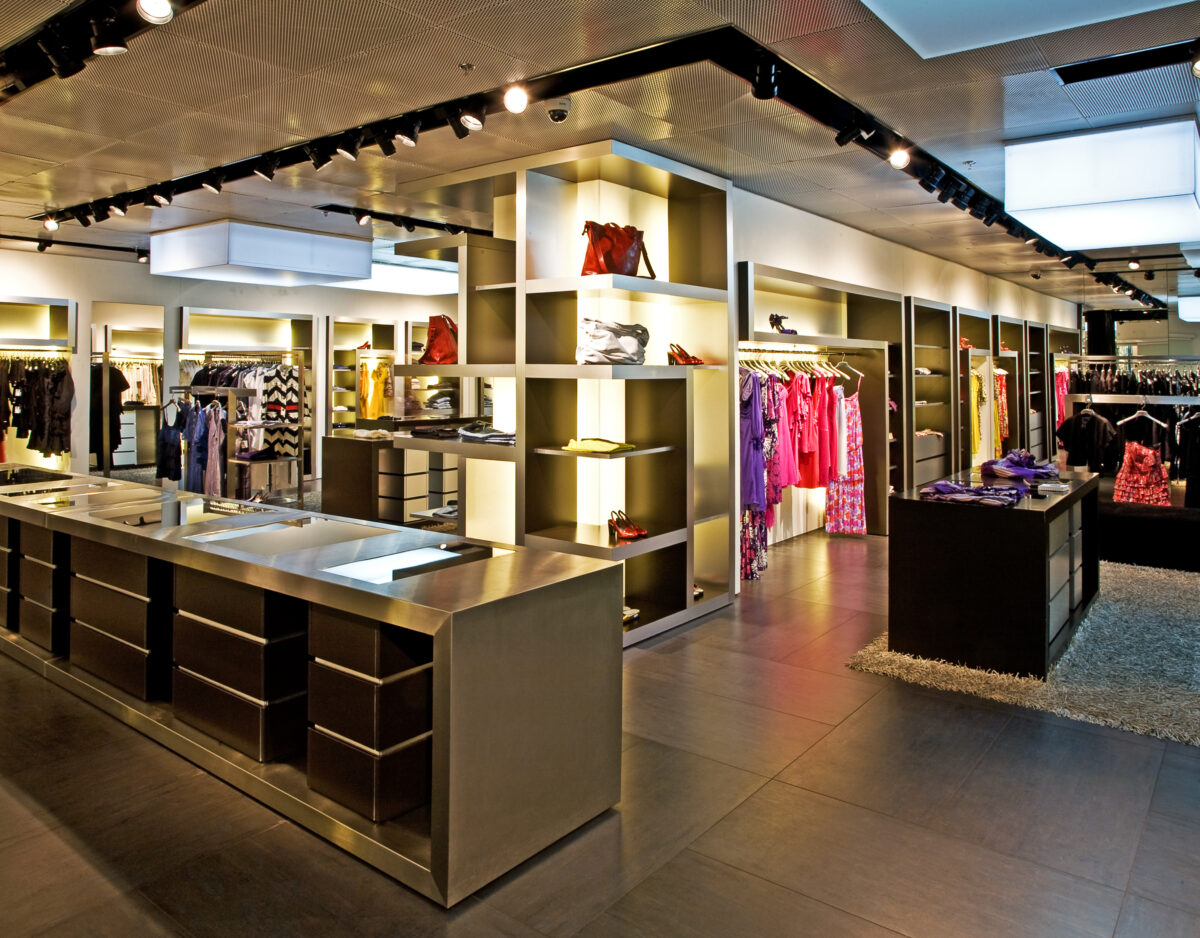
Solutions for commercial properties where sound is part of the service and atmosphere. From a cozy coffee shop to a shopping mall.
Both systems and separate equipment for background sound
Full cycle: from acoustic calculations to facility delivery
Dividing the space into zones with different volume levels and content.
Calculating the placement of ceiling or wall speakers for uniform coverage.
A selection of 100V PA amplifiers and speakers from trusted brands.
Concealed cable routing and speaker installation without disturbing the interior design.
Setting up a priority channel to automatically mute music during a fire alarm.
Regular system performance testing and remote staff consultation.
Direct equipment supply, strict adherence to specifications, and in-house commissioning.
No loud speakers overhead or dead zones. The music sounds soft and uniform throughout the entire room.
We work strictly according to specifications and regulations. All systems undergo mandatory testing before delivery.
Having our own repair facility allows us to provide an extended warranty on installation.
| Engineer's visit and inspection of the site (Moscow) | For free |
| Mounting a ceiling speaker | from 1000 rubles per point |
| Mounting a wall speaker | from 1000 rubles per point |
| Installation of a broadcast amplifier and switching | from 10,000 rubles. |
| System setup and zoning | from 15,000 rubles. |
| Design with acoustic calculations | from 50,000 rubles. |
The exact cost is determined after a site inspection. The estimate is agreed upon before work begins and remains unchanged. Equipment is priced separately according to the specifications.
Technical solution for background sound - Public Address system — is built on 100-volt transmission lines. A 100V PA system allows you to connect dozens of speakers to a single amplifier and transmit the signal hundreds of meters without loss of quality—something impossible with home and concert stereo systems. Below, we'll discuss what such a system consists of and what to consider when choosing.
Any background sound system consists of six components: loudspeakers create the sound field, PA amplifiers feed the zone lines, acoustic processors ensure sound quality, players deliver content, microphone consoles add service announcements, and the switching system ties it all together. A weak link in any of these six components drags down the entire system—we'll examine each component separately below.
The type of speaker is determined by the ceiling structure, room height, and acoustic conditions. The main types of PA speakers are:

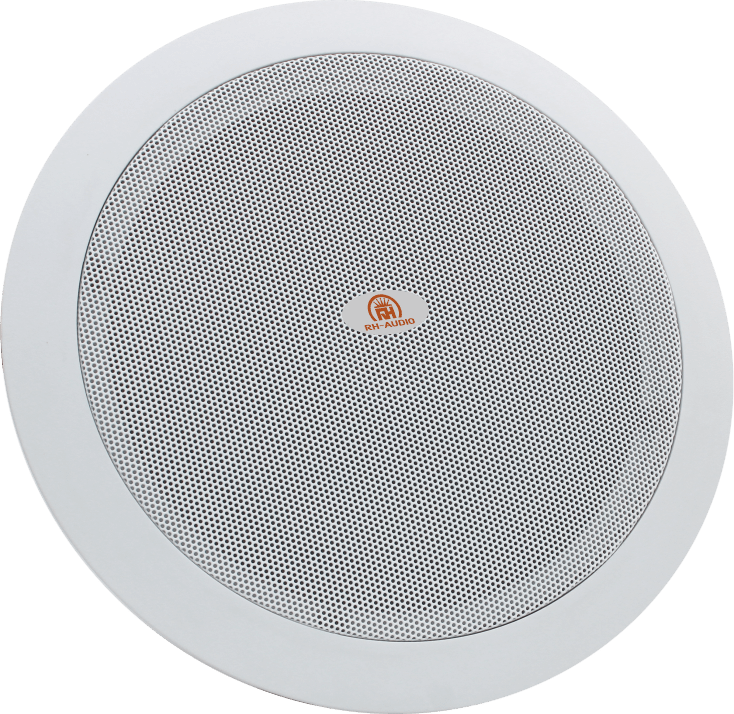
The most popular option for suspended ceilings is Armstrong or plasterboard. They are unnoticeable in the interior and provide a uniform coverage from top to bottom.
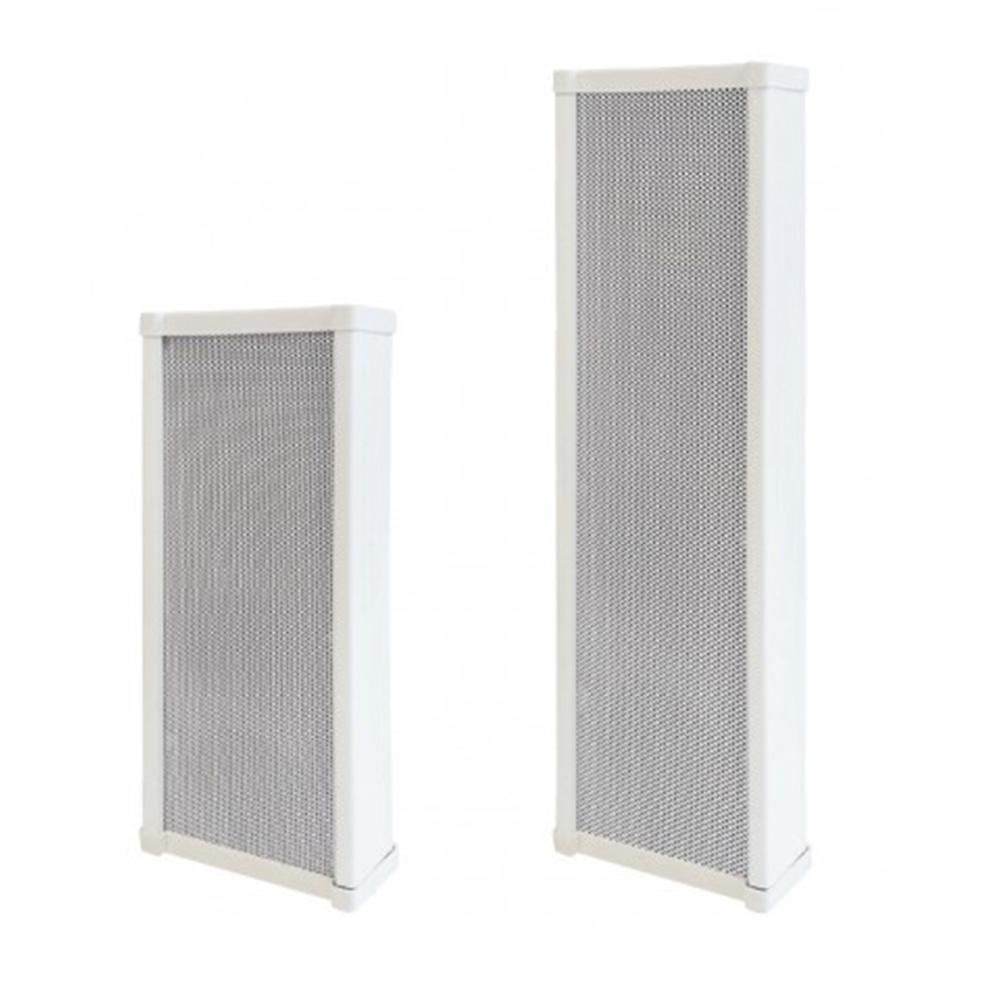
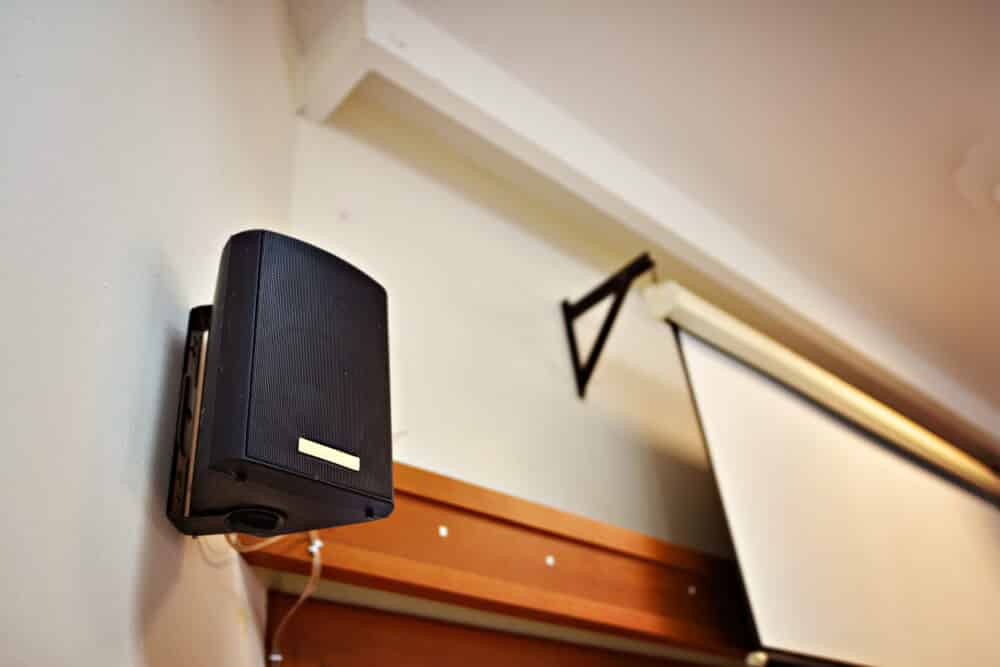
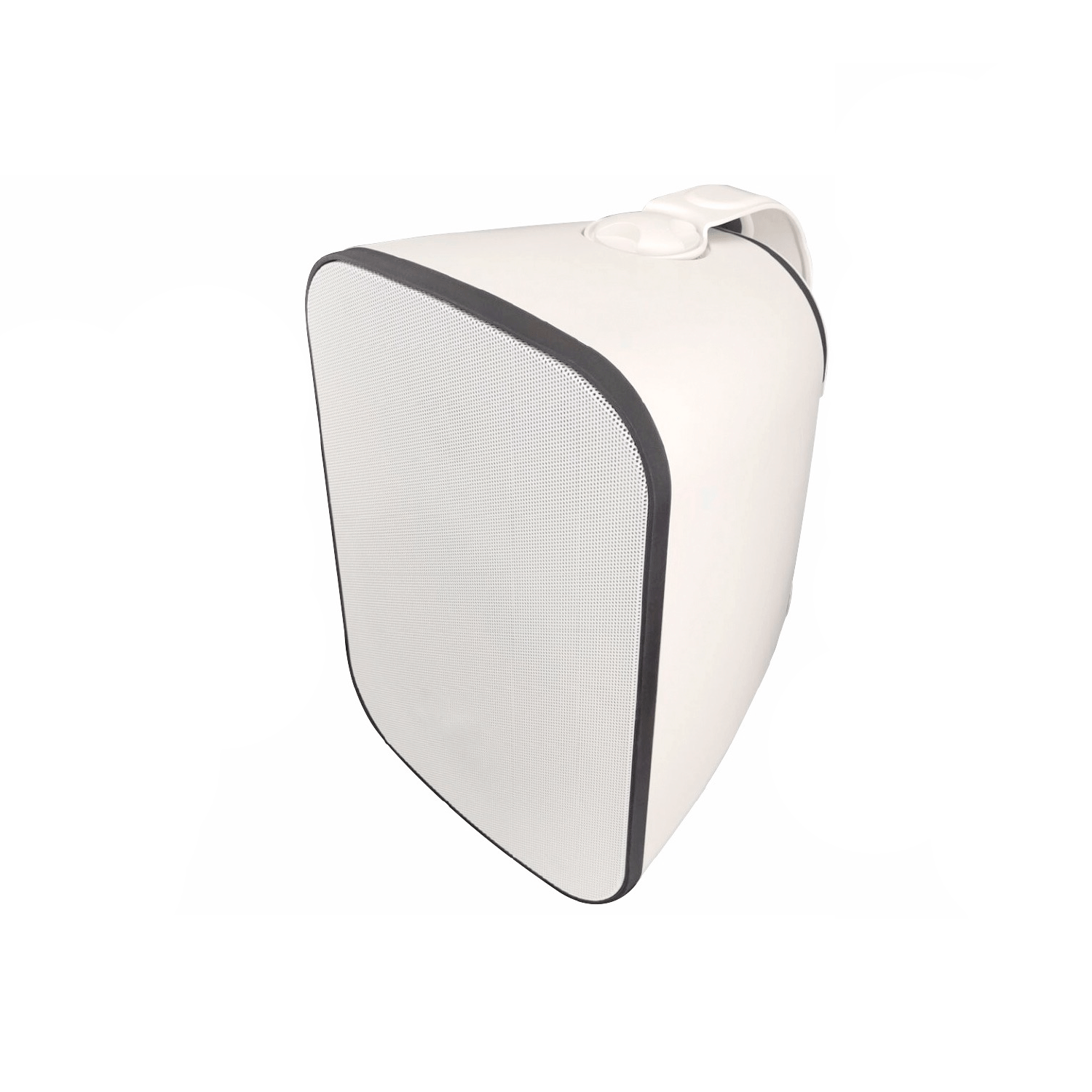
They are used in restaurants, stores with open ceilings (loft style), or outdoors. They have a bracket for adjusting the angle.

Narrow vertical systems for difficult acoustic conditions (temples, train stations), where reverberation needs to be cut through.
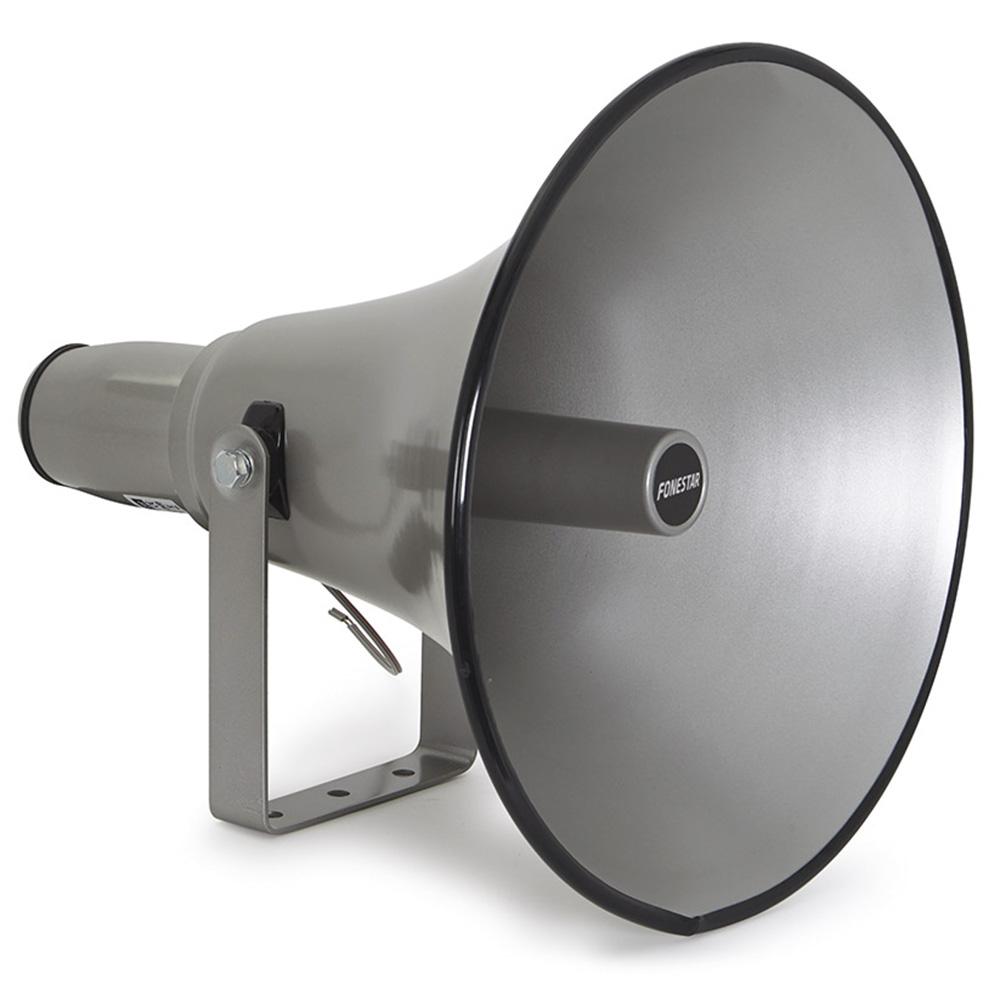
Horn systems for open spaces, stadiums, parking lots, and large warehouses. They offer long range and speech intelligibility.
Each type has its own parameters: power, frequency response, dispersion, moisture protection, low-impedance connection, or 100V line. Incorrect choice of type and installation pitch is the main cause of uneven sound, when "loud here, inaudible there.".
We install ceiling speakers in all types of ceilings: recessed into Armstrong and drywall, surface-mounted onto concrete slabs, and even suspended ceilings using flush-mounted brackets. We install wall-mounted speakers on adjustable brackets, with the angle adjusted according to the design. We install cables concealed behind the ceiling and in chases, and in finished interiors, in cable channels matching the finish. Nighttime installation is also possible to avoid disruption to business operations.
Power amplifiers are selected with a reserve of 20-30% from the total power of all speakers. For facilities with multiple zones (fitness centers: locker rooms, cardio area, swimming pool), multi-zone mixer amplifiers — volume and source are set separately for each zone.
Acoustic processors adjust the amplitude-frequency and phase-frequency characteristics of the audio system, improving speech intelligibility and eliminating sound artifacts. The difference between a system "with" and "without" a processor is audible even to an untrained person.
The final sound of the entire system depends on the player and the quality of the content—it's like watching 480p video on a 4K screen: the source is good, but the result isn't. We use professional players and provide recommendations on the technical requirements for music content.
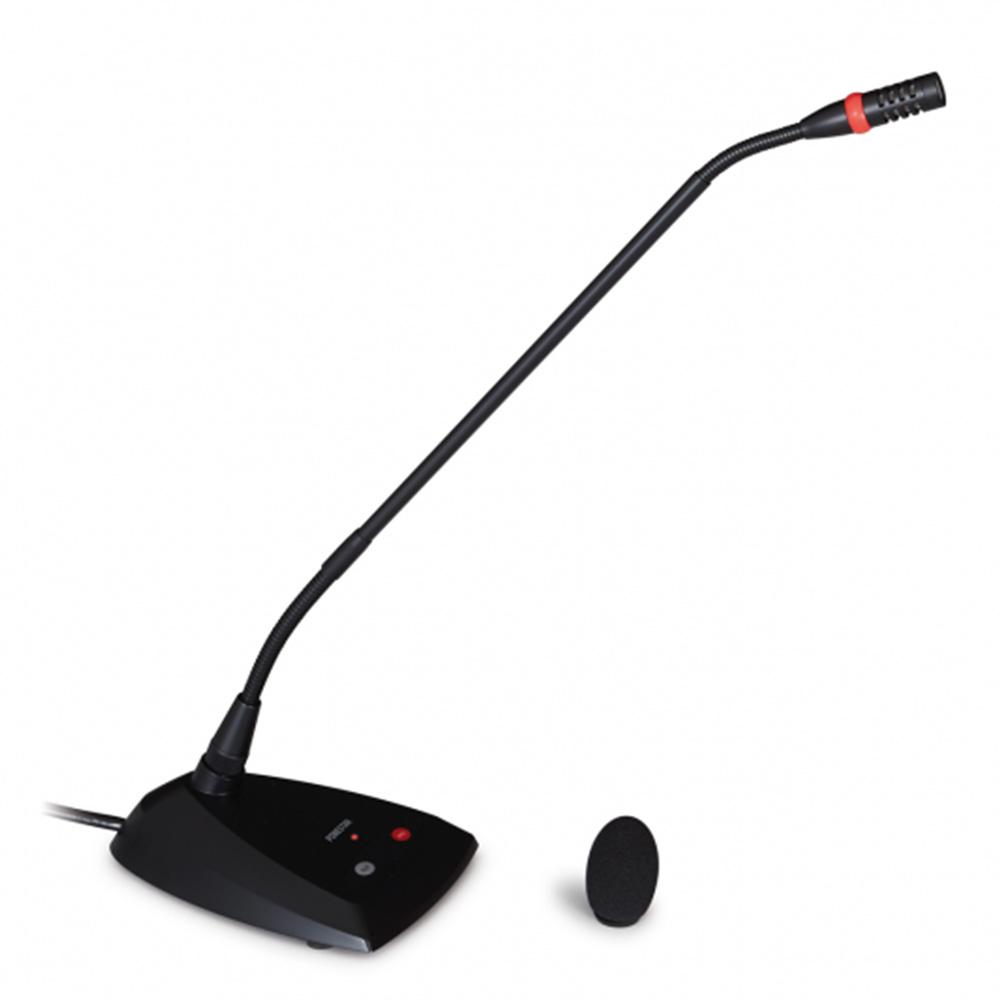
Paging microphone consoles are integrated into the background sound system—a system for making service announcements to staff and visitors. This is ideal for shopping centers, supermarkets, and train stations. Digital protocols (Dante) or analog lines with priority are used: background music is automatically muted during announcements, and if a fire alarm is triggered, the Paging channel receives absolute priority.
Cable is not a place to skimp:
The engineer will clarify the room's parameters: area, ceiling height, number of zones, and background noise level. If you have a floor plan or design project (DWG/PDF), please send it immediately; this will significantly speed up the selection process and improve its accuracy.
Based on the initial data, the engineer selects a configuration and prepares a proposal with equipment specifications and cost estimates. For complex projects—multiple zones, high ceilings, challenging acoustics—we perform a design with acoustic calculations and a sound coverage map. This is a separate engineering project, billable and included in the project.
We purchase equipment directly from distributors. Our installation team arrives at the agreed-upon time. night editing, so as not to interfere with the business. Cable routes are concealed.
We set up equalization and volume limiters, check coverage uniformity across zones, and train the administrator on system management. We hand over the project with as-built documentation and a warranty for the work performed.
In conventional low-impedance acoustics, a single amplifier drives 2–4 speakers over a short cable. A 100V PA system operates differently: the signal is transmitted at high voltage, allowing dozens of speakers to be connected to a single line over hundreds of meters of cable without any loss of quality. This is why 100V systems are the standard for background sound in stores, shopping centers, hotels, and offices.
It depends on the ceiling height, noise level, and the intended use of the zones: one ceiling speaker typically covers 15–25 m² with ceilings around three meters high. However, calculating "by area" is an oversimplification: to ensure uniform sound without "dead" spots or areas where the speaker "blares" overhead, an acoustic calculation with a sound coverage map is performed—we create this as part of the design process. Send us your room plan—we'll select a configuration and prepare a commercial proposal.
Yes. The system integrates a microphone console for service announcements: when a button is pressed, the music automatically mutes, the announcement plays, and then the volume gradually returns. The system also communicates with the fire alarm system—in the event of an alarm, the broadcast is muted, and the fire alarm system's notification channel receives absolute priority.
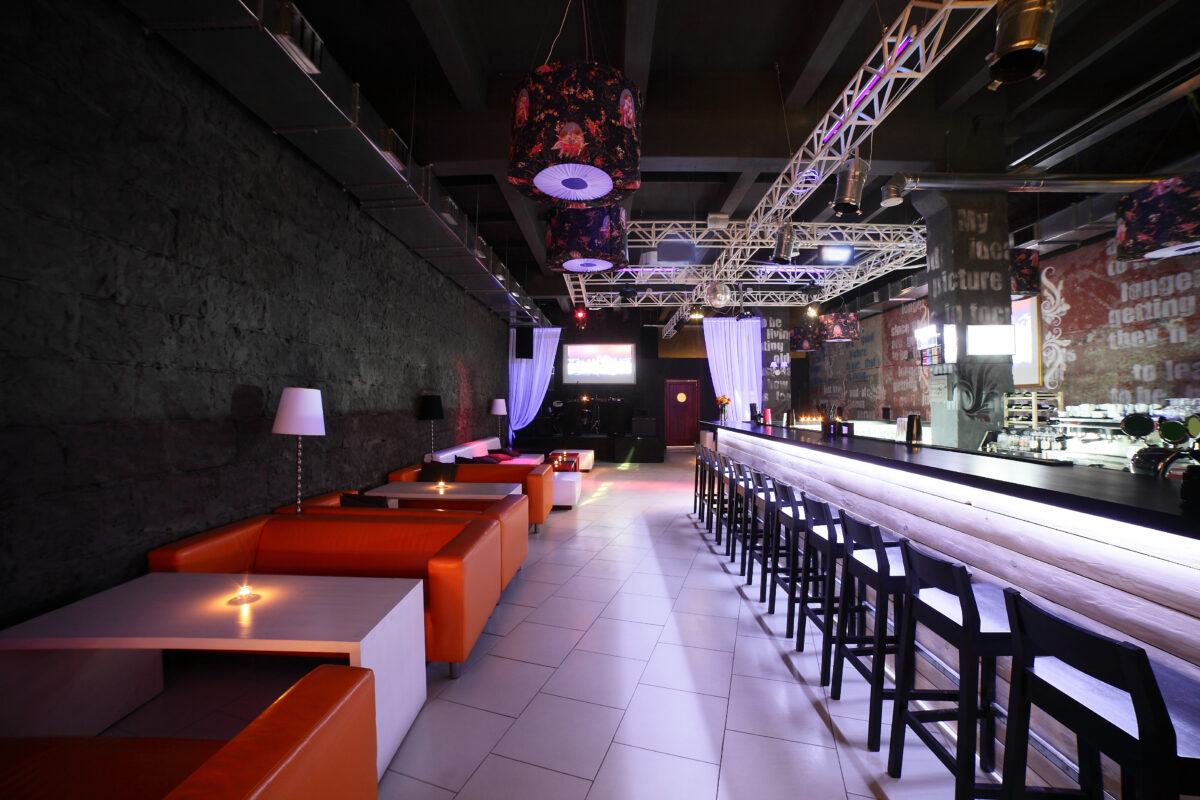
Yes, multi-zone mixers and amplifiers are used for this purpose. Upbeat music can be played in the bar, calmer music in the dining room, and the restrooms and utility rooms can have their own volume levels. Zone controls are displayed on the administrator's tablet or wall panel, and staff are trained during the facility's handover.
The cost depends on the area, ceiling height, and number of zones. After confirming the parameters, you will receive a commercial proposal with equipment specifications and labor costs. The estimate is fixed before installation and remains unchanged. For complex projects, acoustic design is performed; this is paid for separately and included in the project.